
Forthcoming · In editorial review
The practical companion to Enter the Possible
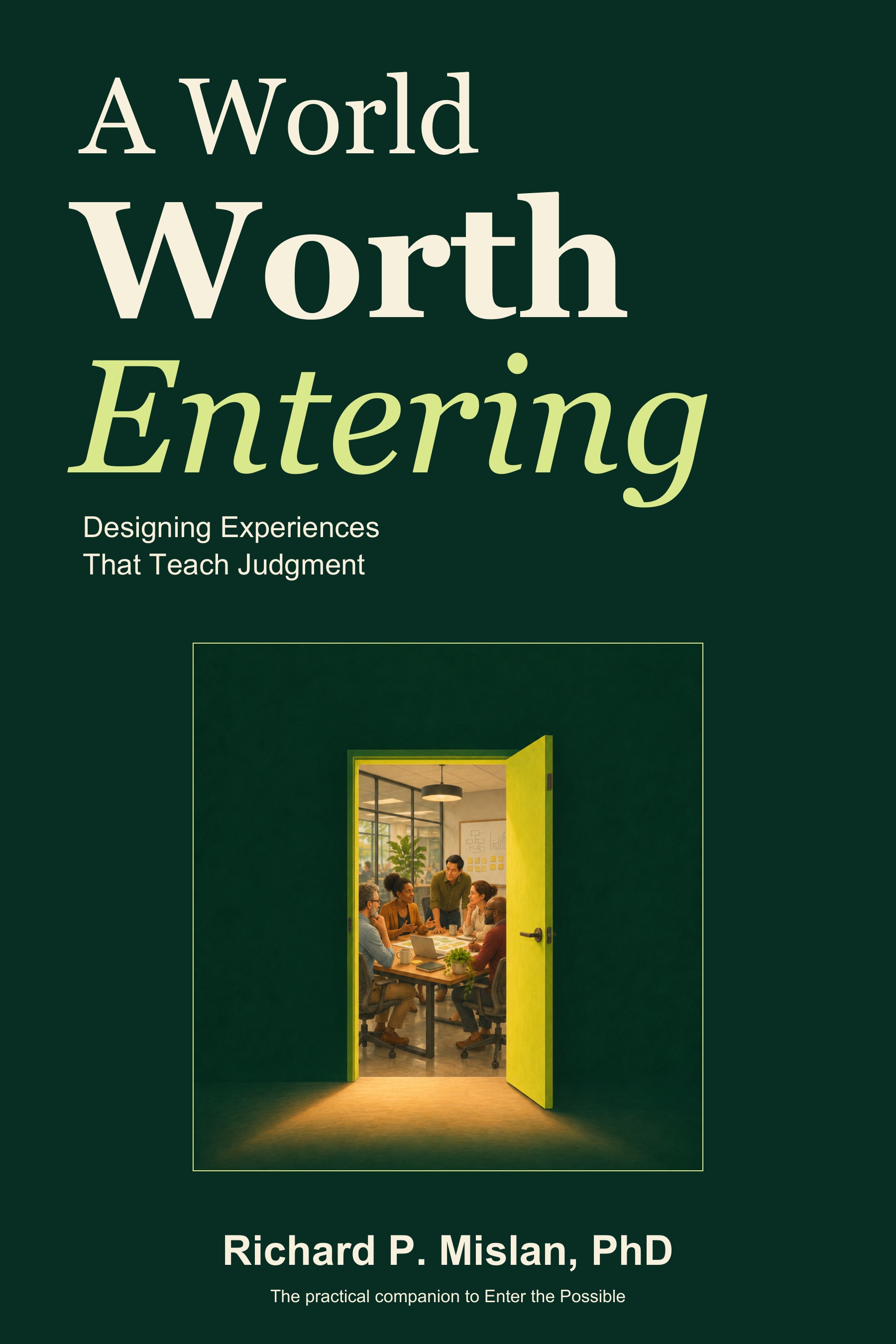
A World
Worth Entering
Designing Experiences That Teach Judgment
Give people something worth deciding—and build the experience that helps them learn from what follows.
Publication details will be announced here.
From the idea to the design
A small world.
A meaningful
responsibility.
A learning center wants to stay open later. Staff time is limited. Some people need evening access; others depend on the hours already offered.
That fictional situation becomes a running example of what it takes to design an experience people can enter and help shape. Each chapter adds another part: a responsibility, a decision, a different perspective, a response, or a reason to reconsider.
A World Worth Entering moves from the philosophy of Enter the Possible to the practical choices behind a manageable first version. It is written for educators, workplace facilitators, and people who want to connect learning with the careful use of knowledge.
The learning center, its records, and its outcomes are fictional teaching examples. They illustrate design choices rather than report a tested intervention.
Inside the forthcoming book
Ten chapters.
One experience
you can build.
Read in sequence while developing a small experience of your own. Return to a chapter when a particular design decision needs attention.
Begin with Chapter 101Begin with Something People Care About
Start with a human concern people can recognize, and find the knowledge that would help someone respond.
Read this chapter02Give Someone a Responsibility
Give learners a clear responsibility, an audience for their work, and a realistic understanding of their authority.
03Make the Decision Difficult for a Reason
Let the difficulty come from evidence, resources, and competing needs that make the decision worth examining.
04Nobody Gets the Whole Picture
Consider who can see which parts of the situation, and how an exchange can change a recommendation.
05Build the Smallest World That Works
Prepare the brief, evidence, and materials needed for a meaningful first attempt. Add detail when it serves the learning.
06Let the World Answer Back
Connect a decision to a response learners can investigate, then give them an opportunity to revise.
07Leave Room for the Unexpected
Respond when learners find an option you did not anticipate while preserving the facts and commitments of the experience.
08The Conversation After the Decision
Build a debrief around what participants actually did, what they understood, and what they would reconsider.
09Watch What People Actually Do
Examine the evidence in learners’ work, the support they needed, and the limits of what one activity can establish.
10Build Something Others Can Enter
Bring the materials, facilitation guidance, and design decisions together so another educator can use and adapt them.